Many users wonder whether an existing lead-acid battery charger can be reused to charge newly upgraded lithium batteries. The direct answer is not recommended and unsafe. Different battery chemistries have distinct charging logic, and mismatched charging will cause permanent damage and hidden safety hazards. This guide clearly explains the incompatibility reasons, potential risks and correct charging solutions.
Core Reason for Incompatibility
Lead-acid batteries and lithium batteries including LiFePO4, lithium-ion and lithium polymer adopt totally different charging mechanisms.
Traditional lead-acid chargers follow three-stage charging modes: bulk charging, absorption charging and float maintenance charging. After reaching full power, they will continuously output stable float voltage to keep the battery fully charged, which is essential for daily maintenance of lead-acid batteries.
However, lithium batteries have strict fixed cut-off charging voltage. Once fully charged, charging must stop immediately without any continuous float current. Sustained supplementary voltage will break the internal chemical balance of lithium cells.
Hidden Dangers of Wrong Charging
- Severe overcharging: Continuous current input after full power accelerates cell aging, reduces actual available capacity sharply
- Thermal safety risks: Long-term abnormal charging easily causes battery swelling, gas leakage, and even thermal runaway in severe cases
- BMS system failure: Built-in BMS protection board of lithium packs will frequently trigger overvoltage protection, resulting in incomplete charging and permanent circuit damage
- Sharp shortened service life: Original long cycle life advantage of lithium batteries will be completely lost under irregular charging
Different Usage Scenario Risks
- Unregulated ordinary lead-acid charger: Highest risk, unlimited current output will directly burn out lithium battery packs
- Multi-stage smart lead-acid charger: Relatively mild but still unsafe, the late-stage float voltage will slowly consume lithium battery performance
- Rely on BMS for forced power-off: Only temporary protection, frequent protection triggering will damage battery stability and cannot achieve standard full charging
Standard Correct Charging Method
To safely extend lithium battery lifespan, users must choose dedicated lithium-specific chargers matching battery types.
Key Selection Standards
- Clearly mark compatible battery chemistry: LiFePO4 / Li-ion / LiPo
- Accurate matching voltage: 12V LiFePO4 charger reaches 14.4V-14.6V and cuts off power completely without float voltage
- Adopt standard CC/CV constant current constant voltage charging mode
- Support automatic power-off after full charge and overheating protection
Matching Charger Selection Table
| Usage Scene |
Battery Type |
Recommended Charger |
| Solar energy storage, RV yacht |
12V LiFePO4 |
Special LiFePO4 intelligent charger |
| Electric tools |
Power tool lithium pack |
Original factory dedicated matched charger |
| Electric motorcycle |
Low-voltage lithium iron battery |
Lithium-specific maintenance charger |
| UAV remote control equipment |
LiPo battery |
Professional balanced lithium charger |
Only One Exceptional Situation
If your charger is a new multi-chemistry universal smart charger with independent lithium battery mode, and officially calibrated to 14.4V-14.6V cut-off voltage without float output, it can be used temporarily.
Before use, be sure to check the official parameter manual to confirm the lithium charging curve, never judge compatibility by "smart automatic" label alone.
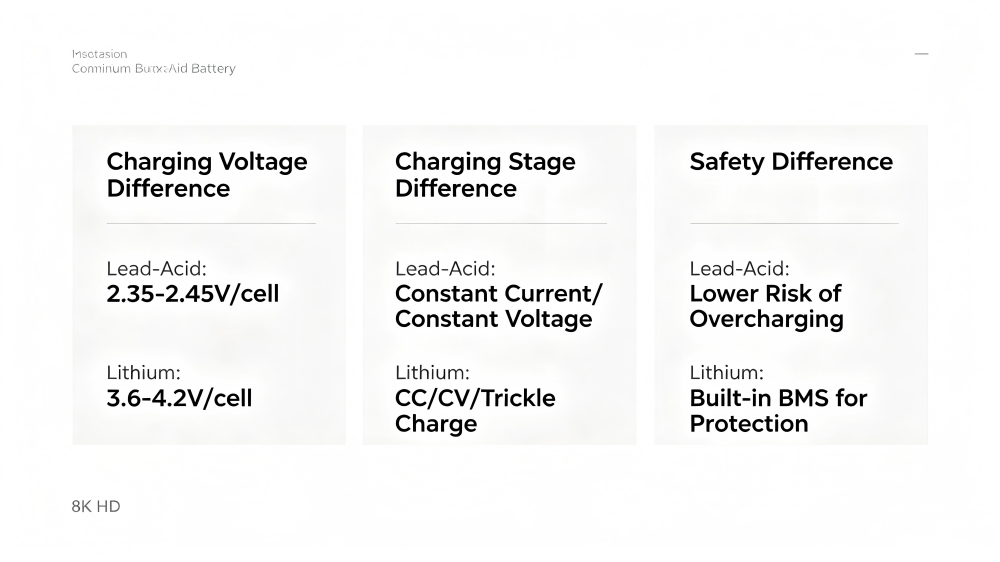
Core Parameter Contrast
Previous :
EVE Energy Showcases Energy Solutions at 2026 World UAV Expo
Next :
2026 Battery Technology Trends: LFP Dominance, Solid-State Breakthroughs & Sodium-Ion's Rise
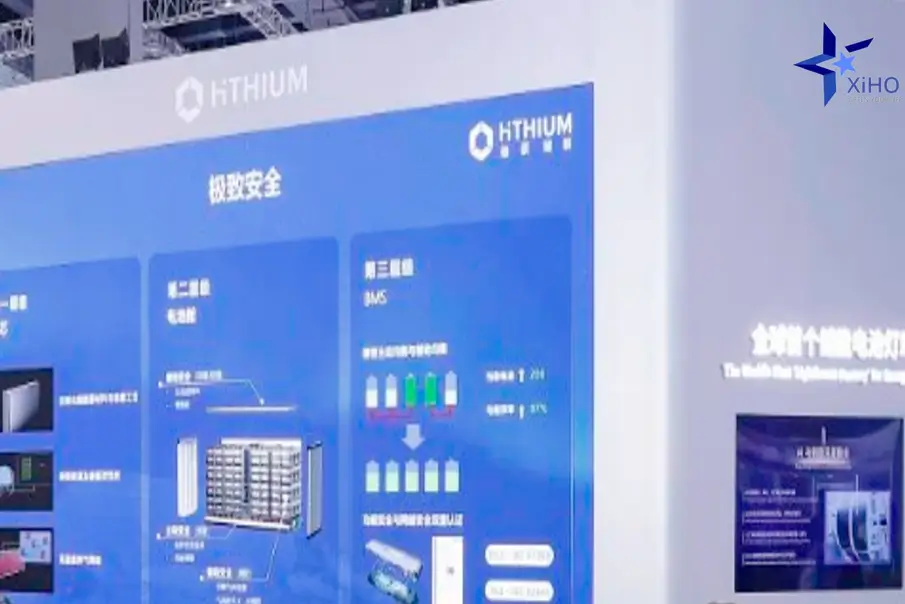 HiTHIUM Launches First Native 8-Hour LDES System at SNEC 2026
Jun .11.2026
Shanghai, June 3, 2026 – At SNEC 2026, HiTHIUM introduced what it calls the world's first native 8-hour long-duration energy storage (LDES) system: the ∞Power 6.9MWh ESS. The company also unveiled its new ∞Cell 650Ah large-capacity battery and the ∞Power 10+MWh product solution.
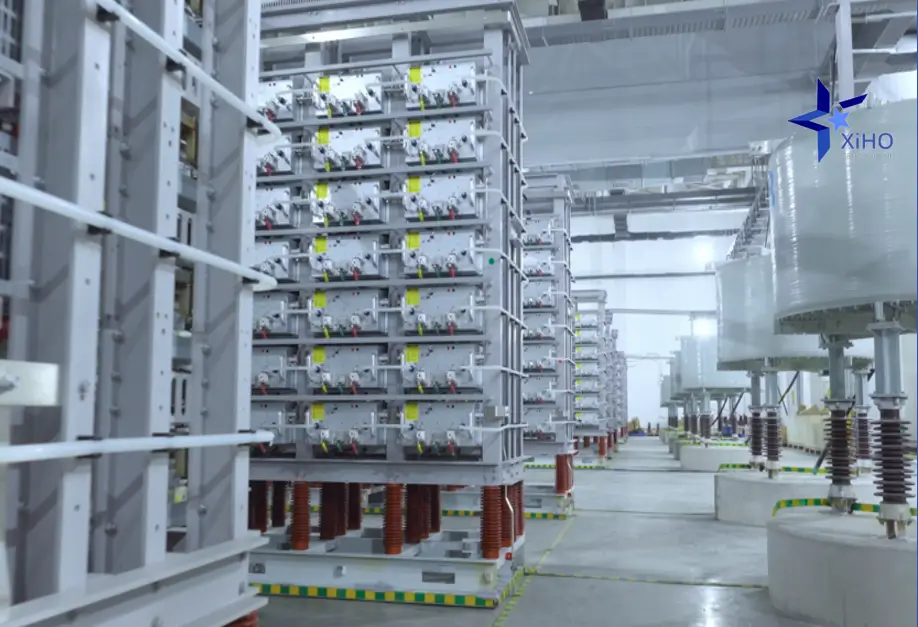 CATL Opens Massive New Energy Storage Test Lab in China
Jun .09.2026
Xiamen, China – May 28, 2026. CATL has officially opened a major new testing facility in Xiamen. Called the Energy Storage Validation Laboratory (ESVL), the site aims to help move the global energy storage industry toward a new standard of real-world, system-level testing before projects are deployed. Covering 10 hectares and built with an investment of about 3 billion yuan (approx. $440 million USD), the company says it is the world’s largest and most comprehensive one-stop testing platform for energy storage systems. CATL intends to run it as an open facility, available for use by the wider industry worldwide.
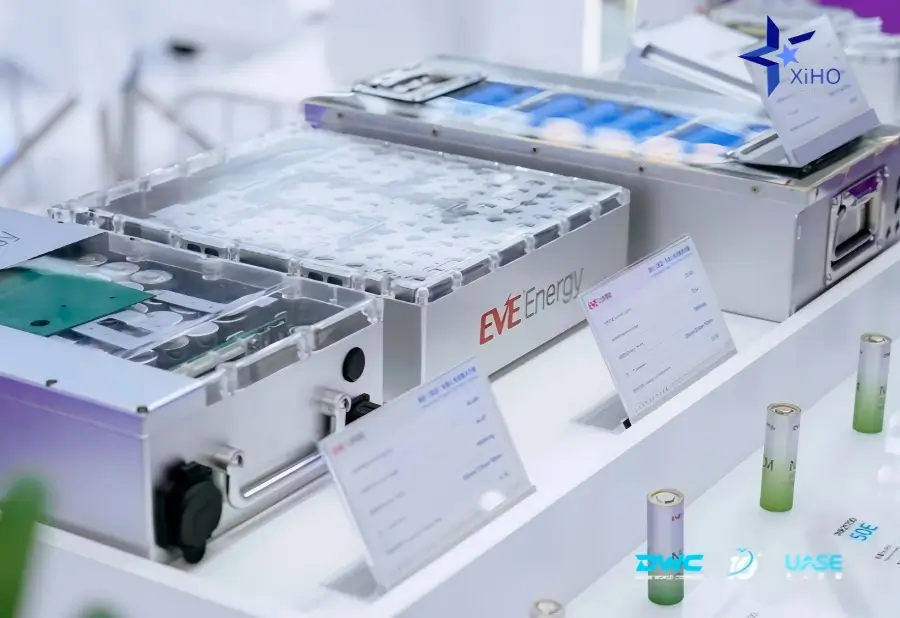 EVE Energy Showcases Energy Solutions at 2026 World UAV Expo
Jun .05.2026
The 2026 World UAV Expo and International Low-Altitude Economy & Unmanned Systems Exhibition (UASE 2026) recently concluded at the Shenzhen World Exhibition & Convention Center. The event gathered industry leaders, technology developers, and commercial operators from the global drone and advanced air mobility sectors. Among the prominent exhibitors was EVE Energy, which presented a comprehensive portfolio of energy solutions tailored for low-altitude aviation and robotics applications.
|

 HiTHIUM Launches First Native 8-Hour LDES System at SNEC 2026
 CATL Opens Massive New Energy Storage Test Lab in China
 EVE Energy Showcases Energy Solutions at 2026 World UAV Expo

