With the popularity of electric vehicles and portable electronic devices, lithium-ion batteries have become the core power of the rechargeable battery field. However, even if they are not connected to any circuit, the power of lithium-ion batteries will mysteriously decrease - this phenomenon is called "self-discharge". Although all batteries have self-discharge, the self-discharge rate of lithium-ion batteries is relatively low (usually <2mV/day), but it still hides complex chemical and physical games. This article will reveal the root cause of self-discharge and explore how to delay this "silent loss".
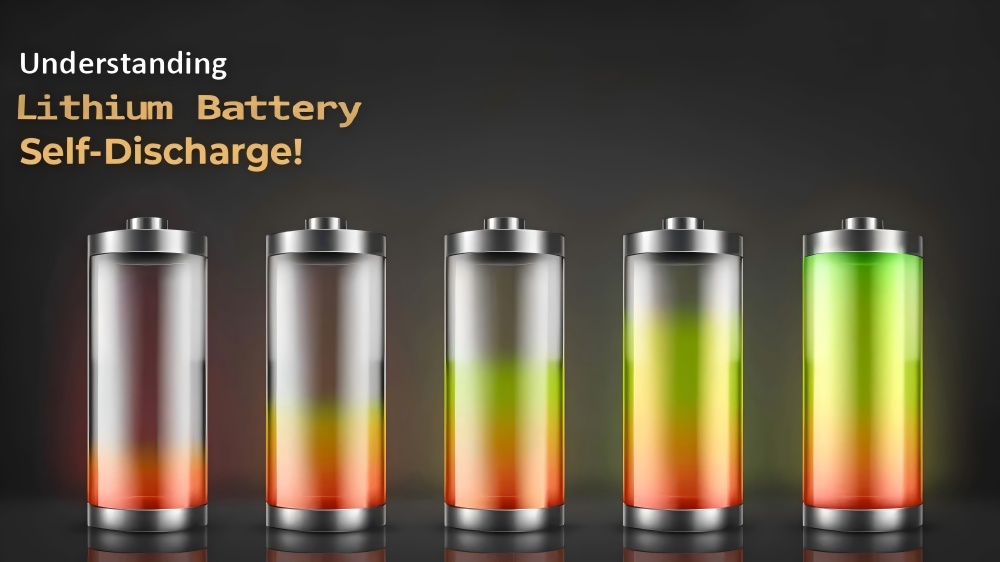
1. Unavoidable chemical side reactions
The self-discharge of lithium-ion batteries mainly comes from two types of reactions:
(1) Chemical side reactions
Dynamic evolution of SEI film: The solid electrolyte interface (SEI film) on the surface of the negative electrode is formed during the first charge and discharge to protect the electrode from corrosion. However, during high temperature or long-term storage, the SEI film will dissolve and regenerate, continuously consuming lithium ions and electrolyte, resulting in capacity loss. This process contributes more than 30% of self-discharge.
Oxidation and reduction of electrolyte: The fully charged positive electrode (such as NCM ternary material) has strong oxidizing properties and will slowly decompose the electrolyte solvent (such as EC, DMC); trace reduction reactions on the negative electrode side further consume active lithium.
Impurity catalytic reaction: Trace amounts of metal ions such as iron and copper in the electrode trigger parasitic reactions, forming local short-circuit "hot spots".
(2) Physical micro-short circuits
Physical micro-short circuit manufacturing defects are the culprit! Diaphragm pinholes, metal dust residues or dendrite growth (such as those formed during overcharging) may penetrate the diaphragm, resulting in micro-conduction between the positive and negative electrodes. Lithium-ion battery manufacturers reduce such defect rates to less than 0.1% through cleanrooms and diaphragm coating technologies (such as ceramic modification).
2. Temperature effectFor every 10°C increase in temperature, the self-discharge rate doubles! High temperatures intensify SEI film reconstruction and electrolyte decomposition, while low temperatures (below 0°C) may freeze the electrolyte and destroy the battery structure. The optimal storage temperature needs to be controlled at 10–25°C, which is also the temperature control standard for most manufacturers to transport lithium-ion batteries.
3. Impact of self-discharge
(1) Capacity decay: Irreversible consumption of active lithium reduces available capacity;
(2) Accelerated aging: Side reactions continue to consume electrolyte, shortening life;
(3) Safety risks: Abnormal micro-short circuits may cause local heating or even thermal runaway. Even more problematic is that self-discharge causes voltage drop, making it difficult for the battery management system (BMS) to accurately estimate the remaining power, affecting equipment reliability.
4. Countermeasures for battery self-discharge
(1) Material innovation
LiFePO4 battery’s stability advantage: battery management system (LFP) positive electrode has weaker oxidation resistance than ternary materials, the electrolyte decomposition rate is reduced by 40%, and the self-discharge rate is significantly lower.
New additives: VC (vinyl carbonate) strengthens the SEI film and reduces dissolution; fluorinated electrolytes (such as LiFSI salts) improve oxidation resistance.
(2) Storage and use strategies
State of charge control: Charge to 40–60% SOC for long-term storage (full charge accelerates oxidation, empty charge is prone to over-discharge).
Regular wake-up: Lithium-ion batteries that have been idle for more than 3 months need to be recharged to 50%.
(3) Manufacturing process upgrade
Top lithium-ion battery manufacturers use laser cutting to reduce burrs, magnetic separation technology to remove electrode metal impurities, and the membrane porosity is optimized to 40% to balance ion conduction and electronic isolation.
Although self-discharge cannot be completely eliminated, it points the way for the evolution of battery technology: from the material innovation of LiFePO4 battery, to the dynamic compensation strategy of smart BMS, to nano-level dust control at the manufacturing end, every step is to fight against this "silent loss". In the future, solid electrolytes may completely block the electron leakage path, but today, scientific storage and material selection are still the key to protecting the power of lithium-ion batteries.

 HiTHIUM Launches First Native 8-Hour LDES System at SNEC 2026
 CATL Opens Massive New Energy Storage Test Lab in China
 EVE Energy Showcases Energy Solutions at 2026 World UAV Expo

