For lithium ion battery manufacturers, international certification is the key to opening the global market. However, IEC and CE certifications are often confused, especially when products involve high safety requirements such as lifepo4 batteries. Choosing the wrong path may lead to cost surges or market rejection. This article disassembles the core differences and practical strategies of the two certifications from the perspective of the lithium battery industry.
1. The essential difference between IEC and CE certification
(1) Nature of certification
IEC certification: Based on the International Electrotechnical Commission (IEC) standards (such as IEC 62133 lithium battery safety specifications), it is a non-mandatory technical certification that proves that lithium batteries meet international general safety requirements.
CE certification: It is a mandatory requirement of EU law. Rechargeable batteries without the CE mark are prohibited from being sold in the EU and must comply with directives such as LVD (Low Voltage Directive) and EMC (Electromagnetic Compatibility).
(2) Scope of application
IEC reports are the "passport" for lithium batteries to enter emerging markets such as the Middle East, Southeast Asia, and Latin America. They are especially recognized by non-EU countries such as Saudi Arabia and India.
CE certification is only applicable to the EU and the European Economic Area (EEA) and is the entry threshold for markets such as Germany and France.
(3) Standard system
IEC standards (such as IEC 62619 Industrial lithium battery safety) are internationally accepted benchmarks;
CE's EN standards (such as EN 62133) are derived from IEC, but they are superimposed with the EU's unique RoHS hazardous substance restrictions and REACH chemical regulations.
(Tip: The lifepo4 battery that has passed the IEC 62133 test still needs to undergo additional EMC immunity testing before it can be CE certified.)
2. When should I choose IEC? When must I choose CE?
(1) Scenarios where IEC certification is preferred
The target market is a non-EU country (such as Brazil's energy storage project and Saudi Arabia's solar lithium battery project);
In international bidding, customers explicitly require IEC 62133 test reports (common in power battery procurement);
Lithium ion battery manufacturers need to enhance their technical credibility and pave the way for product globalization.
(2) Scenarios where CE certification is required
Rechargeable batteries sold to the EU (including electric vehicle batteries and home energy storage systems);
Amazon/eBay and other platforms are forced to remove lithium batteries without the CE mark;
Lifepo4 batteries belong to the "high-risk category" covered by the CE directive and must pass the LVD+EMC dual directives.
3. Detailed analysis of high-frequency problems faced by lithium battery manufacturers
Q1: If I already have an IEC report, can I quickly obtain CE certification?
It can be converted, but the EU difference items need to be tested. For example:
IEC 62133 report needs to supplement EN 55032 electromagnetic radiation test;
The lithium battery packaging needs to add a "crossed-out trash can" recycling logo (EU battery directive requirement).
Q2: Does CE certification cover IEC standards?
Partial coverage but not equivalent. CE's EN 62133 is based on IEC standards, but with additional requirements:
The heavy metal content of the battery complies with RoHS (cadmium ≤ 0.002%, lead ≤ 0.004%);
Provide the address of the EU authorized representative (EAR).
Q3: Does IEC certification have a certificate?
IEC itself does not issue certificates, only test reports. However, it can be converted into a 60-country recognized certificate through CB certification (based on the IECEE multilateral mutual recognition agreement), accelerating the global access of lithium batteries.
For lithium ion battery manufacturers, IEC is the "global passport" of technical strength, and CE is the "legal ticket" to the EU market. Only by accurately selecting the certification path can lithium battery win business opportunities in compliance.

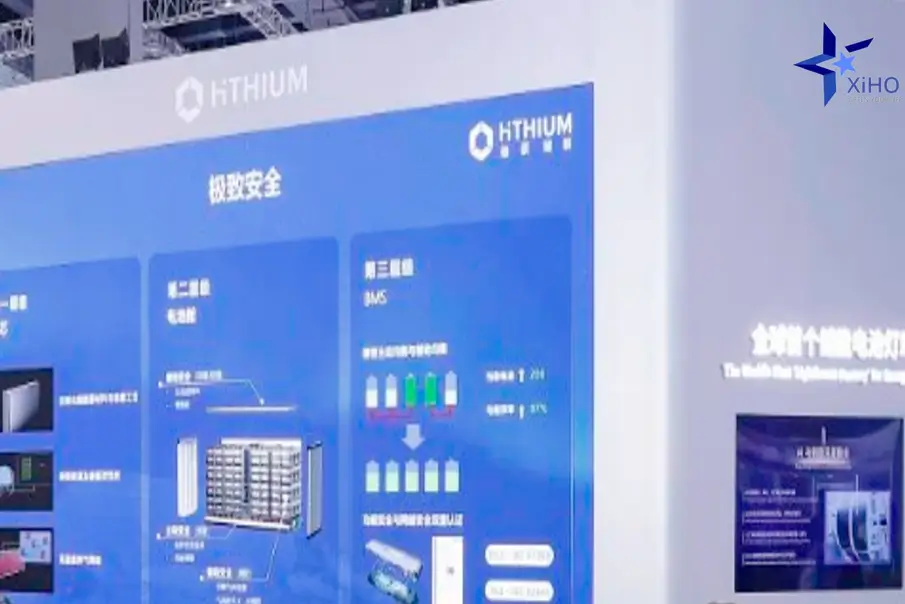 HiTHIUM Launches First Native 8-Hour LDES System at SNEC 2026
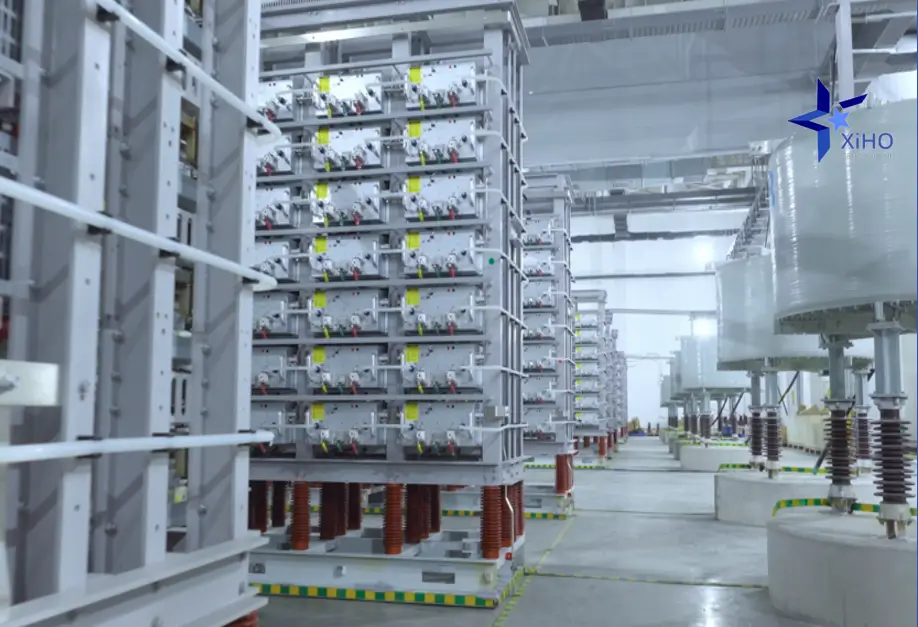 CATL Opens Massive New Energy Storage Test Lab in China
 EVE Energy Showcases Energy Solutions at 2026 World UAV Expo

